 info@gkvllp.com
In today’s competitive business environment, employee productivity is one of the biggest drivers of organizational success. While companies often focus on technology, training, and management strategies to improve performance, one important factor is sometimes overlooked—the workplace itself.
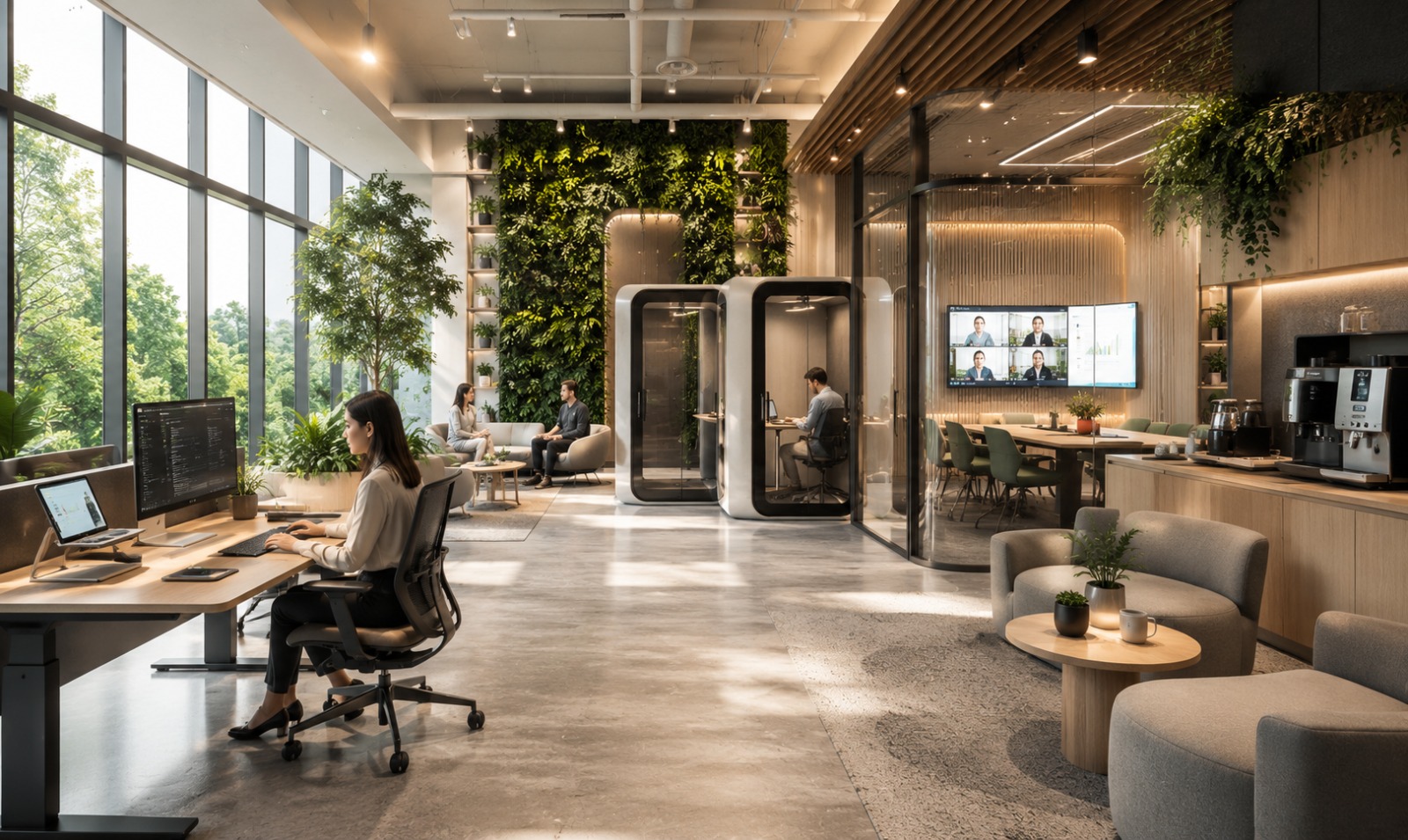
Office interior design has a direct impact on how employees think, work, communicate, and feel throughout the day. A well-designed office creates an environment that supports focus, creativity, collaboration, and overall well-being. On the other hand, poorly planned workspaces can lead to distractions, discomfort, low morale, and reduced efficiency.
At GKV LLP, we believe that great office design is about much more than appearance. It’s about creating spaces that help businesses achieve their goals while providing employees with a comfortable and inspiring place to work.
The Connection Between Office Design and Productivity
Employees spend a significant portion of their day in the workplace. Their surroundings influence everything from concentration and motivation to teamwork and job satisfaction.
A thoughtfully designed office helps employees:
- Stay focused for longer periods
- Collaborate more effectively
- Feel physically comfortable
- Experience less stress
- Improve creativity
- Work more efficiently
- Build stronger team relationships
When businesses invest in quality office interiors, they are also investing in their people.
Comfortable Employees Perform Better
Comfort is one of the most important aspects of workplace design.
Poor seating, incorrect desk heights, insufficient lighting, and cramped workstations can all contribute to physical discomfort. Over time, these issues may lead to fatigue, reduced concentration, and even health problems.
A productive office should include:
- Ergonomic chairs
- Proper desk heights
- Adjustable workstations
- Comfortable meeting rooms
- Relaxation spaces
- Adequate circulation areas
Employees who are comfortable are able to concentrate better and remain productive throughout the day.
Natural Lighting Improves Focus
Lighting plays a major role in workplace performance.
Natural daylight helps regulate the body’s internal clock, improves mood, and reduces eye strain. Offices that maximize daylight often create healthier and more energetic work environments.
To improve lighting, businesses can incorporate:
- Large windows
- Glass partitions
- Skylights
- LED lighting systems
- Adjustable task lighting
Proper lighting also creates a more welcoming atmosphere for clients and visitors.
Smart Space Planning Reduces Distractions
An organized office layout allows employees to move efficiently while minimizing unnecessary interruptions.
Good space planning includes:
- Clearly defined workstations
- Dedicated meeting rooms
- Quiet focus zones
- Collaborative discussion areas
- Efficient storage solutions
- Wide circulation pathways
A balanced layout ensures employees have the right environment for different types of work.
Collaboration Drives Innovation
Many successful ideas emerge through teamwork.
Modern office interiors encourage collaboration by creating informal meeting spaces where employees can exchange ideas freely.
Examples include:
- Breakout lounges
- Open collaboration tables
- Brainstorming rooms
- Café-style seating areas
- Flexible meeting spaces
These spaces encourage communication while supporting innovation and problem-solving.
Ergonomic Furniture Supports Long-Term Health
Employees spend several hours each day sitting at their desks.
Poor posture and uncomfortable furniture can cause:
- Neck pain
- Back pain
- Shoulder strain
- Wrist discomfort
- Fatigue
Investing in ergonomic furniture helps reduce physical strain while improving overall comfort.
Popular ergonomic solutions include:
- Adjustable office chairs
- Sit-stand desks
- Monitor arms
- Keyboard trays
- Footrests
- Proper lumbar support
Healthy employees are generally happier, more engaged, and more productive.
Office Acoustics Matter
Noise is one of the biggest workplace distractions.
Open-plan offices often create challenges due to conversations, phone calls, and background sounds.
Acoustic improvements include:
- Sound-absorbing ceiling panels
- Acoustic wall panels
- Carpet flooring
- Private phone booths
- Meeting pods
- Fabric partitions
Reducing unwanted noise helps employees concentrate on their tasks without unnecessary interruptions.
Colours Influence Mood and Performance
Colour psychology plays an important role in office interiors.
Different colours create different emotional responses.
For example:
Blue
Promotes concentration and calmness.
Green
Creates a relaxing atmosphere while reducing eye fatigue.
Yellow
Encourages creativity and optimism.
Neutral Colours
Provide a clean, professional appearance that minimizes distractions.
A balanced colour palette creates a pleasant and motivating work environment.
Bringing Nature into the Workplace
Biophilic design has become one of the most popular office design trends.
Adding natural elements helps reduce stress while improving employee satisfaction.
Businesses can incorporate:
- Indoor plants
- Living green walls
- Wooden finishes
- Natural stone textures
- Water features
- Outdoor breakout areas
Natural environments often lead to improved creativity and better workplace experiences.
Technology Enhances Workplace Efficiency
Modern offices increasingly rely on smart technology to improve daily operations.
Examples include:
- Wireless meeting room technology
- Automated lighting
- Smart access control
- Video conferencing systems
- Digital room booking
- Intelligent climate control
Technology simplifies workflows while supporting hybrid work environments.
A Strong First Impression Builds Trust
Office design isn’t only for employees.
Clients, partners, and visitors also form opinions based on the workplace environment.
A professional office featuring an elegant reception, branded interiors, quality furniture, and organized layouts demonstrates professionalism and attention to detail.
A positive first impression can strengthen business relationships before a meeting even begins.
Investing in Employee Well-being
Employee wellness is becoming an essential part of workplace planning.
Companies now include spaces that promote both physical and mental health.
Examples include:
- Wellness rooms
- Quiet meditation spaces
- Comfortable breakout lounges
- Pantry and café areas
- Fitness facilities
- Outdoor seating
Supporting employee well-being leads to greater job satisfaction and improved organizational performance.
Why Businesses Should Invest in Professional Office Design
Professional office interior designers understand how to combine aesthetics with functionality.
Rather than simply decorating a space, they focus on:
- Space optimization
- Workflow improvement
- Employee comfort
- Brand identity
- Future expansion
- Sustainability
- Budget management
Professional planning helps businesses avoid costly mistakes while maximizing every square foot of available space.
Why Choose GKV LLP?
At GKV LLP, we create office interiors that are practical, modern, and tailored to your business objectives.
Our services include:
- Office space planning
- Corporate interior design
- Reception area design
- Modular office furniture solutions
- Meeting room design
- Office renovation
- Storage and locker systems
- Turnkey commercial interior projects
Every project is designed with productivity, functionality, and long-term value in mind.
Frequently Asked Questions
Does office design really affect productivity?
Yes. A comfortable, organized, and well-lit workspace helps employees focus better, reduces fatigue, and supports collaboration, all of which contribute to higher productivity.
What is the most important element of office design?
There is no single element. Effective office design combines ergonomic furniture, proper lighting, smart layouts, acoustics, technology, and employee well-being.
How often should businesses renovate their office?
Most offices benefit from a renovation or design refresh every 5 to 10 years, depending on business growth, changing work styles, and wear and tear.
Is office interior design suitable for small businesses?
Absolutely. Even smaller offices can benefit from thoughtful space planning, ergonomic furniture, and efficient layouts that maximize available space.
Conclusion
Office interior design is far more than an aesthetic investment—it is a strategic tool that enhances employee productivity, strengthens company culture, and creates a positive impression on clients and visitors. From ergonomic furniture and natural lighting to smart technology and collaborative spaces, every design decision contributes to a more efficient and enjoyable workplace.
Whether you’re setting up a new office or upgrading your existing workspace, investing in professional interior design can deliver long-term benefits for your employees and your business.
Looking to create a workplace that inspires productivity and reflects your brand? Contact GKV LLP today to explore customized office interior solutions designed for modern businesses.